
THEY ARE ALL BACK TO SCHOOL, NOW WHAT'S IT LIKE?
By Angela Mikaelly in 05/11/2022 at 08:33
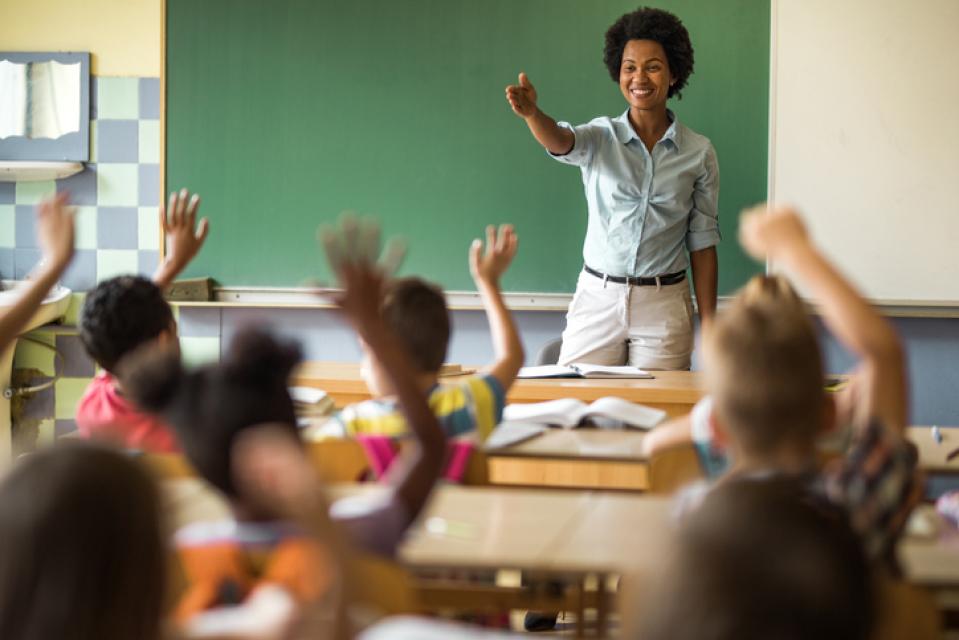
After two years of uncertainty, back and forth, schools reopen and children are back! But how many doubts and news do we have to deal with on this lap? What has changed and what should we pay attention to and take care of?
We had to readapt ourselves in the face of a new scenario imposed by an unpredictable circumstance. We thought that everything would go back to normal at various times and this reality was postponed numerous times. Now everything goes back to "normal" but what is this "normal"? Once again parents, teachers and children had to reinvent themselves, but this time, back to the school scene.
While we were at home, in isolation, the world did not stop, nor did it freeze. The physical return to school does not continue where we left off in March 2020. Now, the child returns a year older, and how much internal change has taken place during this time? Those who go back to school now are different from those who went home at the start of the pandemic.
The inability to attend school, socialize and practice leisure activities, added to the loss of family members and distance from loved ones, compromised the mental and social health of students. Many came back more introspective, anxious, fearful, insecure and with a low threshold for frustration, in addition to being socially worn out. We must develop, more than ever, an individual and very careful look to welcome the needs of each one, understanding the moment they are living now. Without expecting too much from them or even less than they are capable of.
Given this scenario, what is important to be aware of within the classroom?
IMPACTS ON EMOTIONAL HEALTH
Some signs mentioned below deserve attention and should be communicated to parents as soon as they are observed in class on a frequent and recurring basis.
Too much sleep and tiredness, lack of energy, loss of interest in activities you once enjoyed;
Absence or excess of appetite;
Body pain;
Mood swings, lack of patience and irritation;
Lack of concentration and distraction too easily;
Agitation, restlessness and racing thoughts;
Sadness for no apparent reason, constant fear;
Feeling of incapacity and low self-esteem; denial of studies;
Display tics and quirks.
ACADEMIC DIFFICULTY
Many children have come back with developmental setbacks and, therefore, it is important that parents and teachers have the patience for each to develop in their own time. Don't expect the little key to turn overnight. Some need revision, others need to be taught again, and others ask for more challenges because they are ready.
Small groups facilitate this look. Divide the room into groups of a few students and work with each group in turn. The activity can be the same, but the strategies can be modified to meet the needs of each group. For this, it is easy to have chairs positioned in a circle to enable communication or tables to create collective environments.
As for the difficulties presented by some, they are often not lack of skill or ability, but due to a lack of opportunity for the proper development of these skills. Many did not take advantage of online classes, others were unable to adapt to the new school reality, so the causes of these new academic challenges must be carefully and timely observed by asking questions such as:
How long has she had this difficulty?
Does it apply to all areas or is this specific?
Is it constant or fluctuates?
Even with repetition, does he have difficulty retaining learning?
HOW TO MAKE THIS ROUND LIGHTER AND POSITIVE? MOMENT OF SPEAKING AND LISTENING
It is important to provide moments of speaking and listening in the classroom. The more the child feels safe and willing to express himself, the more we will be able to perceive his feelings, anxieties and difficulties. Conversation circles can be done in a playful and fun way. It is through play that we get to know the deepest characteristics and needs of our children.
In the classroom, a favorable environment for well-being and warmth is another important point to be considered. A comfortable and cozy corner to make a conversation circle. Cushions on the floor, rugs, shelves with available materials.
Promoting conversations with parents is also very important. They need to feel welcomed and listened to. Open the school's doors so that they feel welcome and safe to share their yearnings, concerns and expectations at the beginning of the semester. The partnership between family and school is essential for a better student performance.
Source: https://linearica.com.br/artigos/arquitetura-pedag